
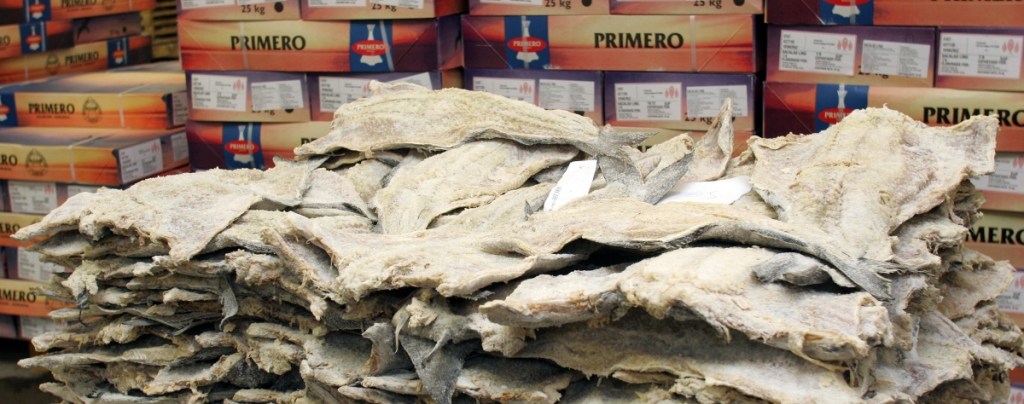
The translation of Bacalhau [which to me in English sounds like ba-ca-laweh) is Cod. But I’ll be referring to it as bacalhau because I love the sound of the word, which has the Portuguese nasally ‘hau’ sound, and because ‘cod’ sounds too simple to do the food justice. Here in Portugal, bacalhau is commonly associated with dried and salted bacalhau. Although unsalted/not dried bacalhau is found in supermarkets and restaurants, for me it doesn’t have that distinctive flavour of the dried, salted stuff. The history of its production is an ancient one and it makes sense why the Portuguese preserved it through salting and drying during a time before refrigerators. What I find really interesting about its popularity in Portuguese cuisine is that despite being a country with a long and fabulous coastline, Portugal import bacalhau from northern Europe (most famously Norway). This fish is just not native to Portugal’s waters, but by looking at a Portuguese restaurant’s menu, one would think that bacalhau was swimming all around the country’s coast. But tradition prevails, and bacalhau dishes continue to dominate this cuisine until today. And thank goodness for that – I adore it.
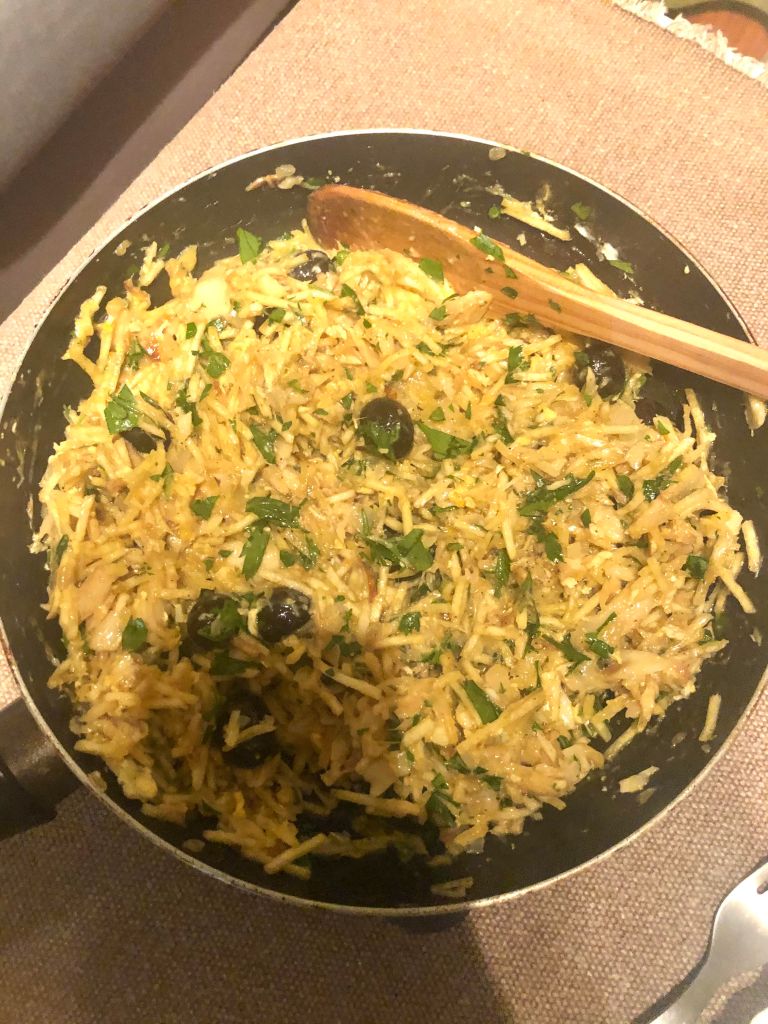
It’s often said that there are 365 different ways to prepare bacalhau, enough for each day of the year. I can’t speak for the reliability of that saying, but I can confirm that there are so many delicious ways to eat it. One of my favourites and a restaurant classic is Bacalhau à Brás – such a simple and modest combination of flavours. It contains just onion, garlic, olive oil, potatoes, bacalhau, eggs, black olives and parsley. When I prepared it at home for the first time, I was so intrigued by how it was even invented in the first place. There’s nothing fancy about it, the potatoes used are store-bought packets of potato sticks (or fried potato matchsticks as called by some), but they soften beautifully when mixed in the pan with all the bacalhau-olive oil juices and eggs. I had never seen a packet of crisps be used in such a way – it’s ingenious if you ask me. The end result is a flavourful explosion of fishy-oily-eggy goodness sprinkled with some juicy black olives and a large handful of fresh parsley. If you prefer more texture, you could always add some of the potato sticks in at the last minute so as to keep their crunch. I really love uncomplicated, quick meals, and this one really makes the cut. Even if you aren’t a fish or seafood fanatic, I have a feeling this one will impress you because the fishiness taste is very mild and not at all overpowering.
The star of the show is of course the bacalhau, which is bought already dried and salted from the supermarket. You can buy it frozen or just dried/salted outside the freezer, both taste just as good and you’ll get the same result which is stringy, salty pieces of bacalhau, . I usually buy it frozen just because it comes already packaged, and when I bring it home I soak it in a big bowl of cold water. The first time I made a bacalhau dish, I followed a Portuguese recipe and I hadn’t really understood the part about the soaking. As a result, the final dish came out tasting a little too much like the ocean. So the rule goes, soak in cold water for a minimum of 24 hours and up to 48 hours, ensuring to change the water a couple of times during that time. It depends on your preference of saltiness, but I’d say 24 hours is a perfect amount of time. After it’s soaked, it’s usually boiled and then incorporated in various ways depending on what bacalhau dish you’re preparing.
Bacalhau fills the shelves of every supermarket in Portugal, and I’m sure with a little digging around, one could find it in several other countries. When I’ll go home to see my family in Australia (when Covid permits easy travel again), I will definitely be buying some from the Portuguese/Spanish deli in Sydney’s little Portugal suburb of Petersham. Given the ease of preservation (it can be kept in a freezer for an eternity), it’s an affordable product that really delivers in the flavour department. If you come across it, I highly encourage you to buy some and try out one of the many delicious bacalhau recipes available online. Here are my go-to recipes for a few of my favourites (you’ll need to use google chrome’s automatic translate feature for the Portuguse sites):
- Bacalhau à Brás : https://www.196flavors.com/portugal-bacalhau-a-bras/
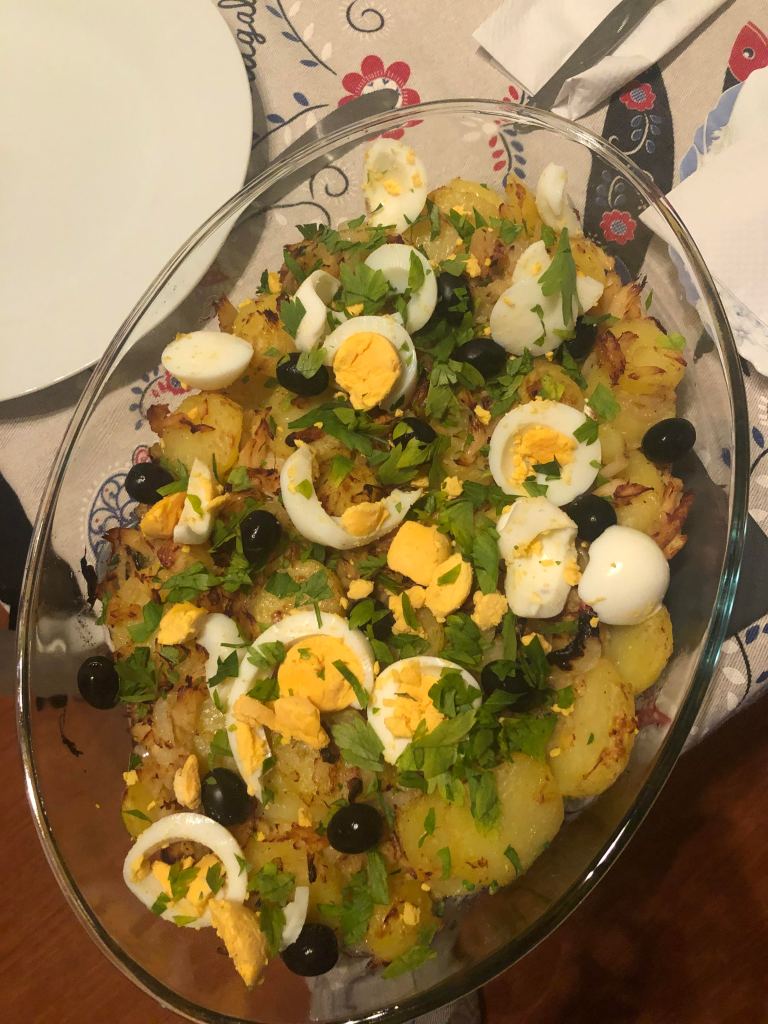
- Bacalhau à Gomes de Sá: I’ve used this recipe several times to make this one, similar in ways to Bacalhau à Brás, but baked in the oven and a healthier alternative:https://www.24kitchen.pt/receita/bacalhau-a-gomes-de-sa-1
- Bacalhau com Natas (bacalhau with cream): Next on my agenda is to prepare this decadently creamy goodness. https://pt.petitchef.com/receitas/prato-principal/bacalhau-com-natas-a-portuguesa-fid-1506898
- Bacalhau Cozido com Grão (boiled bacalhau with chickpeas): A much, much healthier option, but unlike the previous listed recipes, this bacalhau is neither dried nor salted, but frozen and in fillet-form (as opposed to the dried and salted style which is shredded into pieces). It’s served with boiled chickpeas, boiled potatoes, boiled egg and sometimes cabbage or other veg. The only seasoning it needs is some salt and a heavy drizzle of good quality olive oil, preferably from the region of Alentejo.https://www.foodfromportugal.com/pt-pt/receitas/grao-cozido-bacalhau/.
I hope that I’m luckily enough to continue trying the many other fabulous bacalhau dishes that exist (there are several bacalhau salads that i’m yet to try), and to continue using this versatile product in many more home-cooked meals. And if you’re curious to try it yourself but you’ve never tried Portuguese-style bacalhau, do not fear – I love these recipes (and generally all Portuguese cuisine) for exactly this reason – they’re straightforward, easy to make and use simple ingredients. If you have some good quality olive oil, and the oh-so-gorgeous bacalhau, you’re in for a treat. Oh I almost forgot, you can’t leave out a little bit of amor – after all, you are cooking Portuguese. Enjoy it!





 ANGELICA G WRITES
Leave a comment